
Far Away, So Close
…Knowing The Industry

Greetings amigos. If you’re following along with my course in New Documentary Photography, this is the penultimate post. This one got me thinking about the importance of community and returning to my roots. For previous instalments, click here.
Maybe the most necessary subject on this course was titled ‘Knowing the Industry’, and it came via curator, artistic director, and cultural strategist Marina Paulenka.1 We discussed how best to navigate the complex ecosystem of contemporary photography, that is, the museums, galleries, festivals, publishers, editorial platforms, grants, and awards. Making the work is only the start. Once complete, it circulates through these interconnected platforms, and its visibility and legitimacy are shaped along the way. Recognition often depends on the strength of a photographer’s professional network and how their work is positioned and packaged. Here are my “notes to self.”
1 — KNOW WHAT I WANT TO BE
Since getting into photography, my tastes have evolved from accessible single images towards bodies of work that unfold over time and give the viewer something to figure out. Ambiguity and uncertainty often add to the appeal. Equating it to music, it might be the difference between Britpop and indie-rock or post-punk: “Wonderwall” by Oasis versus “New Beginnings” by Yard Act.2
Weighing the photography I admire against my capabilities and aspirations, I have started to understand what might be achievable for me. This course in new documentary opened my eyes to the art of the possible. To use an analogy from an earlier post, the kind of photographer I want to be has shifted from the window toward the mirror. Or put another way, from traditional documentary, where stories are told, toward lens-based art, where the meaning behind stories is evoked.
2 — KNOW WHERE MY WORK FITS IN
Exploring the photographers I admire helps me understand where their work belongs. That is, the festivals, magazines, and galleries that show it, and the curators, designers and publishers that helped put it there. If my work is to be comparable, following these signposts and learning who’s who matters. Knowing where my photography belongs stops me from barking up the wrong tree. It’s not about boxing myself in. It’s about being intentional, understanding my values, and sharing my work where it’s appreciated. If my work evolves, where it belongs can too.
Thinking about output brings me to input. The images I absorb percolate in my subconscious and get recreated on my SD card. To make something original, I should avoid well-worn photographic conventions or tropes and seek artistic alignment. Tailoring my social media feeds and pruning my book collection is part of that exercise, and chasing audience approval is to be resisted - it dilutes the sincerity of my work. It’s not about fitting into a mould. It’s about finding a platform that speaks my language. Create with integrity, then hunt for the right home.
3 — THE WRITE TO TAKE PART
Participation requires writing. Ideas and stories need to be communicated to festival organisers, judges and curators. The process also helps me think more deeply about my work. But there’s a balance. To over-intellectualise or prescribe meaning presumes the viewer lacks the capacity to understand or feel the work. Leaving the door open to alternative interpretations signals trust and respect towards the audience.
Publishing or exhibiting work builds legitimacy, cultivates an audience and makes a cultural contribution. Critical feedback helps refine my practice and calibrate future efforts. Each submission adds to the CV and builds confidence and momentum. Maintaining pre-written artist statements, project descriptions, bios, CVs and grant applications means I’m ready to participate when the right call comes.
4 — WHO I KNOW MATTERS
Photography is not a solo sport. Participating involves collaborating with curators, mentors, designers, publishers, and gallerists. Some of these relationships are transactional, financial or otherwise, while others are mutually beneficial or based on an appreciation for each other’s craft. It can be a mix of these things, of course, but it’s important to be aware of the difference.
Some photographers have what you might call an inner circle that includes fellow photographers, designers or curators they trust to give honest feedback and say when a photograph or series works or doesn’t. Cultivating this group is a worthwhile aim; it anchors your practice and provides a stable base from which to build outward with confidence. Outside of this are strategic associations; people who amplify or promote work. The editors and publishers who might put work in print, the writers who contextualise and critique it, and the gallerists who facilitate an income. Beyond that are the practical players, the printers, framers and bookbinders who physically execute an artistic vision.
Obviously, these distinctions are not hard and fast; trust, collaboration and friendship can occur in any context, but you get my drift. Work doesn’t succeed on merit alone.
5 — SPEND MY WINNINGS ON NEW BEGINNINGS
None of the above counts for much unless I have the work to back it up. With cameras in almost every pocket and the advent of AI, a pleasing image is no longer the most distinguishing factor. Intentions, concepts and coherent bodies of work are the differentiators. If that’s the case, emulating the masters might not be enough. Their work broke ground in a different era. Success these days probably requires going deeper or beyond what I’ve done before, and maybe what others have done. Obviously, that’s easy to say. But with an experimental mindset and the belief that my best work is ahead, who knows where things could go.
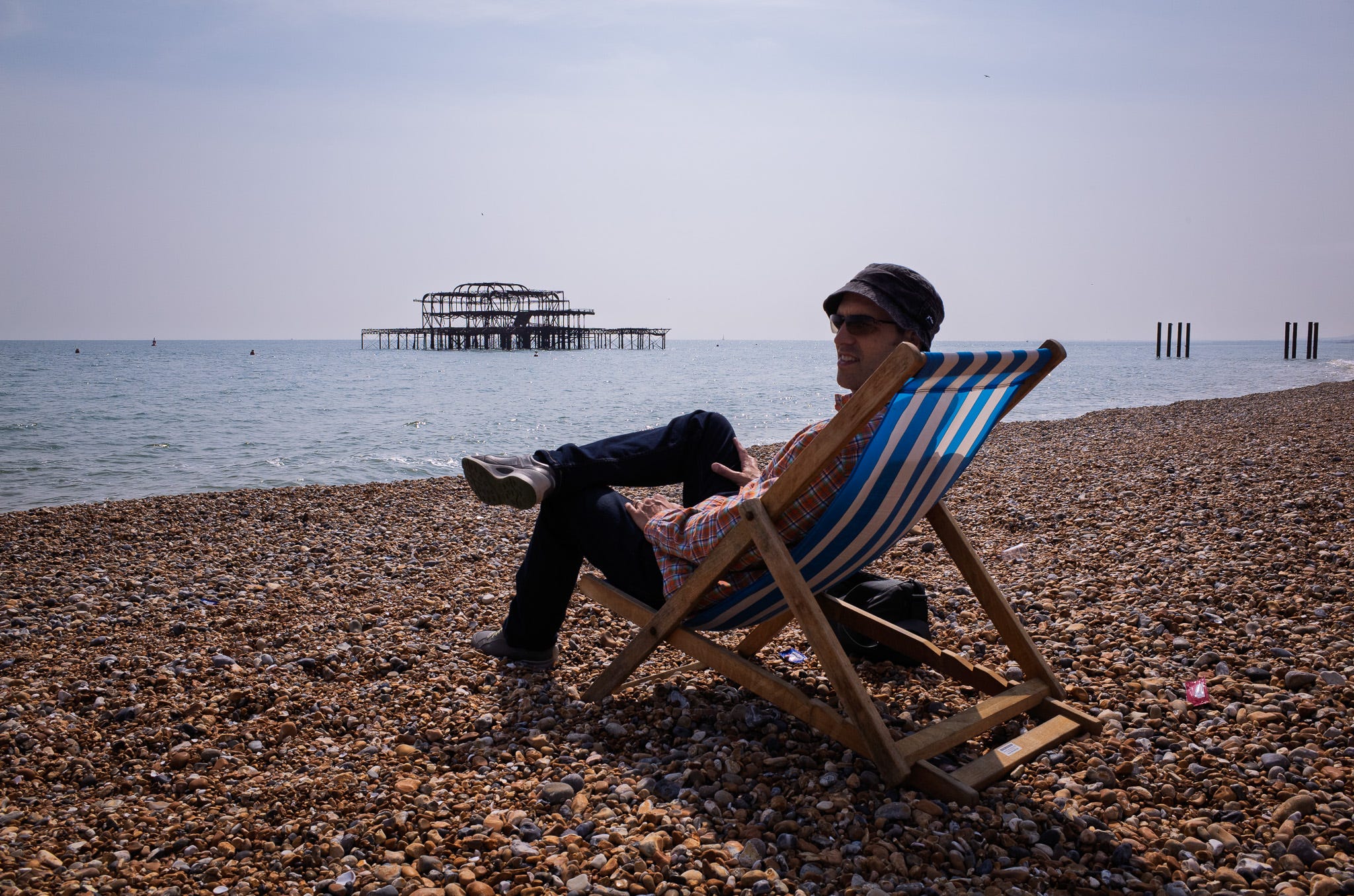
So, what now? Well, being on the road for the last few years, my photographic output and community have been mostly online. But photography should see the light of day, not just the light of a screen. So, in late September this year, I return to my hometown of Brighton, England, to address the balance. It’s been twenty-one years since I lived there. But not all journeys that take you back to where you started are a waste of time. As Heraclitus said, you can’t cross the same river twice because it’s not the same river and you’re not the same man. I know what he means. I left a reluctant office boy and will return a lens-based artist and writer in the making. And, if the Creative City Index3 is anything to go by, there’s no better place to be.
Next up, the final project and my take on “New Documentary Photography”.
Instagram: Marina Paulenka
Spotify: New Beginnings by Yard Act (2026)
Chamber of Business: Top 10 Most Creative Cities for Professionals in the UK
Intrigued by the possibility of reading/seeing your re-discovery of Brighton.
Interesting and personally useful Ben. Thanks