
Let's Be Other People
Conceptual Documentary - the importance of the P.O.V.

If you’re following along with my course in New Documentary Photography, here’s part 5 of 10.
This subject was titled “Conceptual Documentary - the importance of the P.O.V.”, and our instructor was visual artist and photographer, Gloria Oyarzabal.1 Her work has received critical acclaim for its exploration of colonialism and feminism. During the month, Gloria introduced me to concepts and ethical perspectives I’d not previously considered. Some of which I’m still trying to get my head around. These ideas are prevalent in contemporary photography and new documentary. So, if I’m to play in that arena, it’s worth figuring out my point of view.
Otherness
While ancient philosophy laid the groundwork, the modern understanding of “otherness” comes from post-colonial theory. The theory suggests Eurocentric narratives have labelled non-Western people as “Other” to reinforce colonial dominance. It also claims that the remnants of this historical power dynamic that devalues certain ethnicities are still around today. The scope has since broadened and now includes sex, nationality, religion, age, sexual preferences, socioeconomic status, physical or mental ability - the list goes on. In short, it is “us and them” thinking.
The concept of otherness became more interesting to me when we got to psychological and philosophical otherness. And the idea that we can be the other. Internal otherness is the feeling of being a stranger in your own skin. It can stem from mental turmoil, guilt, or a fractured identity. During the early days of the pandemic, after feeling isolated, Erwin Olaf made the series April Fool (2020).2 He cast himself as a melancholic clown in a white dunce cap wandering through empty supermarkets and desolate urban spaces.
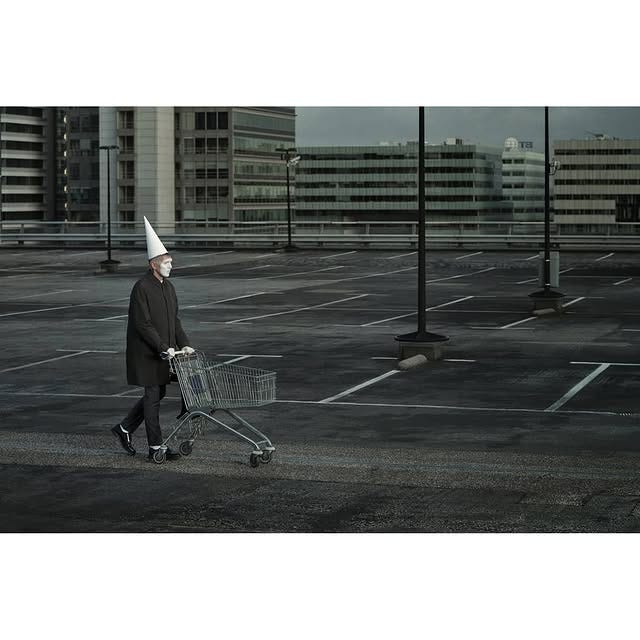
Otherness can also be considered a cognitive process. In this scenario, perceived difference might be a source of discomfort, ranging from mild unease to intense hatred. Contextual and situational otherness occurs when in-groups and out-groups are defined. For example, the labelling of certain things as “normal” and deviations as “abnormal”. A scenario I explored in Nepal.
So, the concept of otherness is broad with plenty of subjective vantage points, but what does it mean for my photography? Has my British background given me a “colonial gaze”? Does my photography reproduce stereotypes? Or does it contain inherited or unexamined beliefs? How do we justify photographing others who are not like us? Where is the line between documentation and exploitation? And, is there another line between ethics and aesthetics?
Ethics
Discussing otherness brought us to ethics. Previous feedback on my Nepal photographs suggested their construction might be rooted in exoticism, privilege and a heritage of colonialism. These interpretations were new to me and gave me pause for thought. However, as I mentioned in my post, Think First, Shoot Later, I now understand that a photographer's immutable characteristics are part of the equation.
To my surprise, even revered photographers like Sebastião Salgado were not immune to ethical criticism. His work brought global attention to issues of poverty, labour exploitation, migration, war, and famine. However, an article in The New Yorker, titled Good Intentions (1991) suggested that aestheticising tragedy could desensitise the viewer because "Beauty is a call to admiration, not to action."3 Which raises the question, should serious topics like famine and war be portrayed in less aesthetic ways? Or, can the beauty of a photograph give dignity to the people in it?4 The answers to these questions are not universal. Viewer sensibilities and the prevailing morals of the day influence whether the context and content are problematic.
Alleviating ethical concerns around otherness and exoticism seems to lie in collaboration and mutual respect. Many of the photographers and visual artists from this course have sought consent or staged their photographs. Others have chosen people-free subject matter. The new documentary approach is about being more conscious of stereotypes, objectification and perceived power imbalances. Whilst determining and communicating a research-based P.O.V.
Assignment
Growing up as a nonbeliever gave me a sense of philosophical otherness at home and at school, and my reluctance to conform to the expectations of the people around me was a source of cognitive unease. It wasn’t a big deal, but the feeling must’ve stayed with me in some way because my camera often turns towards religion. So, for the assignment, I mined my archive and created a visual essay with nonbelievers as ‘the other’ while looking for the common ground we share with believers.
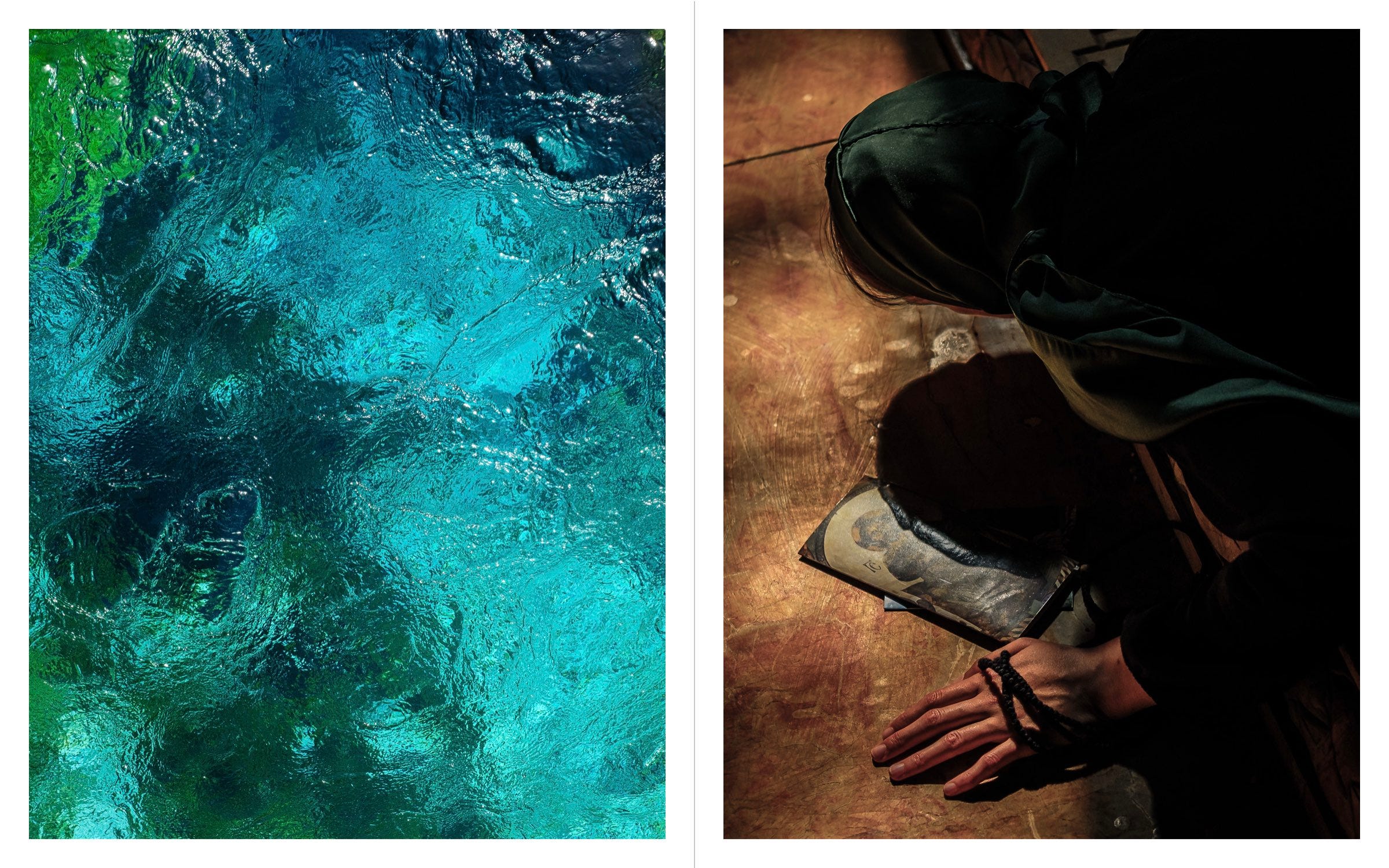
Our task was to combine the poetic and the conceptual. The conceptual approach requires us to prioritise ideas above aesthetics, while being poetic is about evoking emotion and meaning rather than capturing things as they are literally. Conceptual is for intellectual engagement, the head. Poetic is for the heart and maybe the soul. Applying these things to my project meant resisting the temptation to catalogue religion and concentrating on the otherness I was trying to communicate instead.
In an iterative process, I circled between my archive and my influences from books and music. Siddhartha by Hermann Hesse5 is a dogma-free novel that possesses a certain universality and emphasises free-thinking and self-discovery through personal experience. After reading it, I share the seeker mentality and concur with the core message that everything is interconnected. Scientists, in search of the elusive “god particle”, proved something similar. At the quantum level, we are more connected than we imagined, a discovery that, some might say, borders on the spiritual. It reminded me of a song by Nick Cave, Higgs Boson Blues.6 Symbols from both these works of art found their way into my visual decisions.
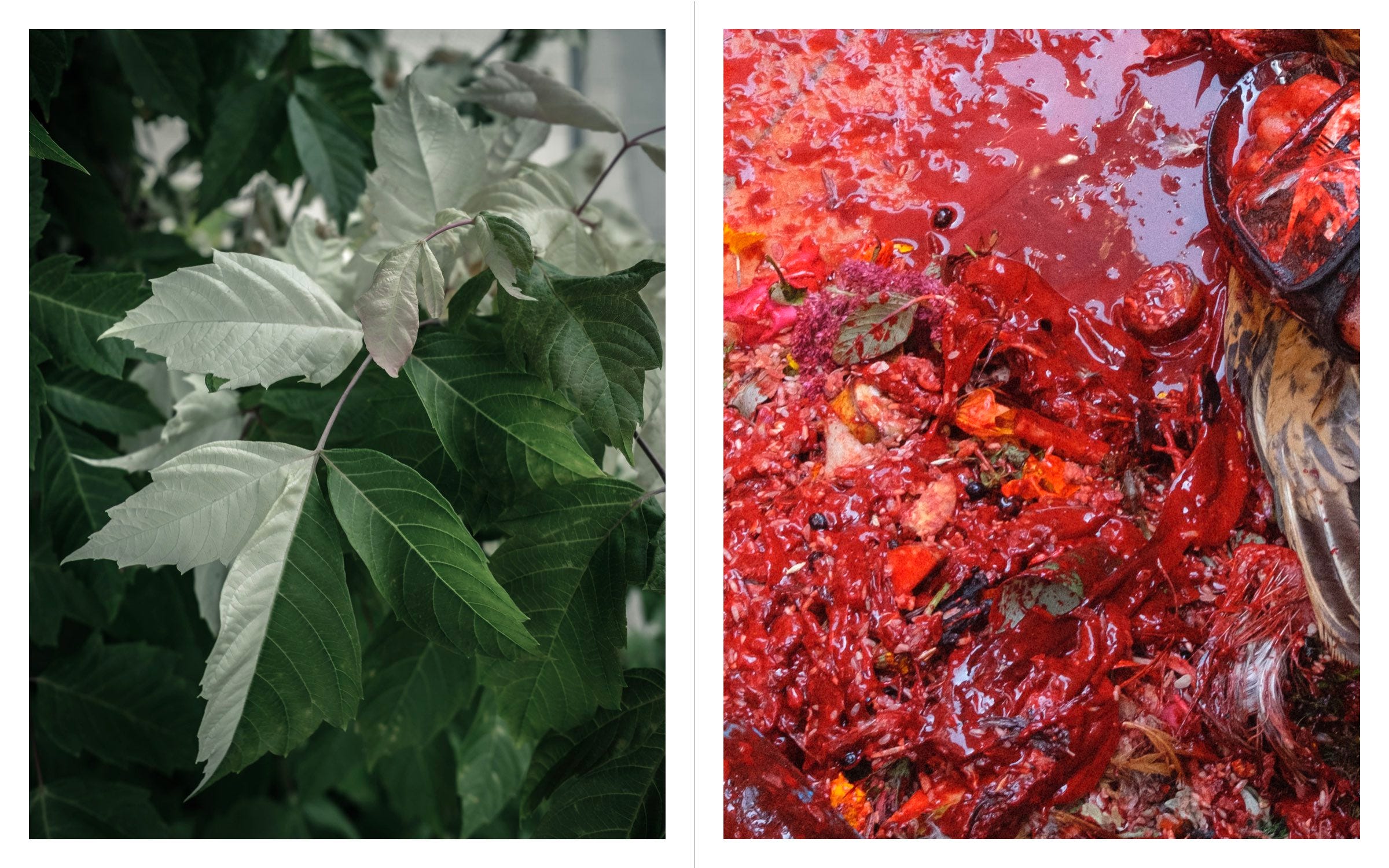
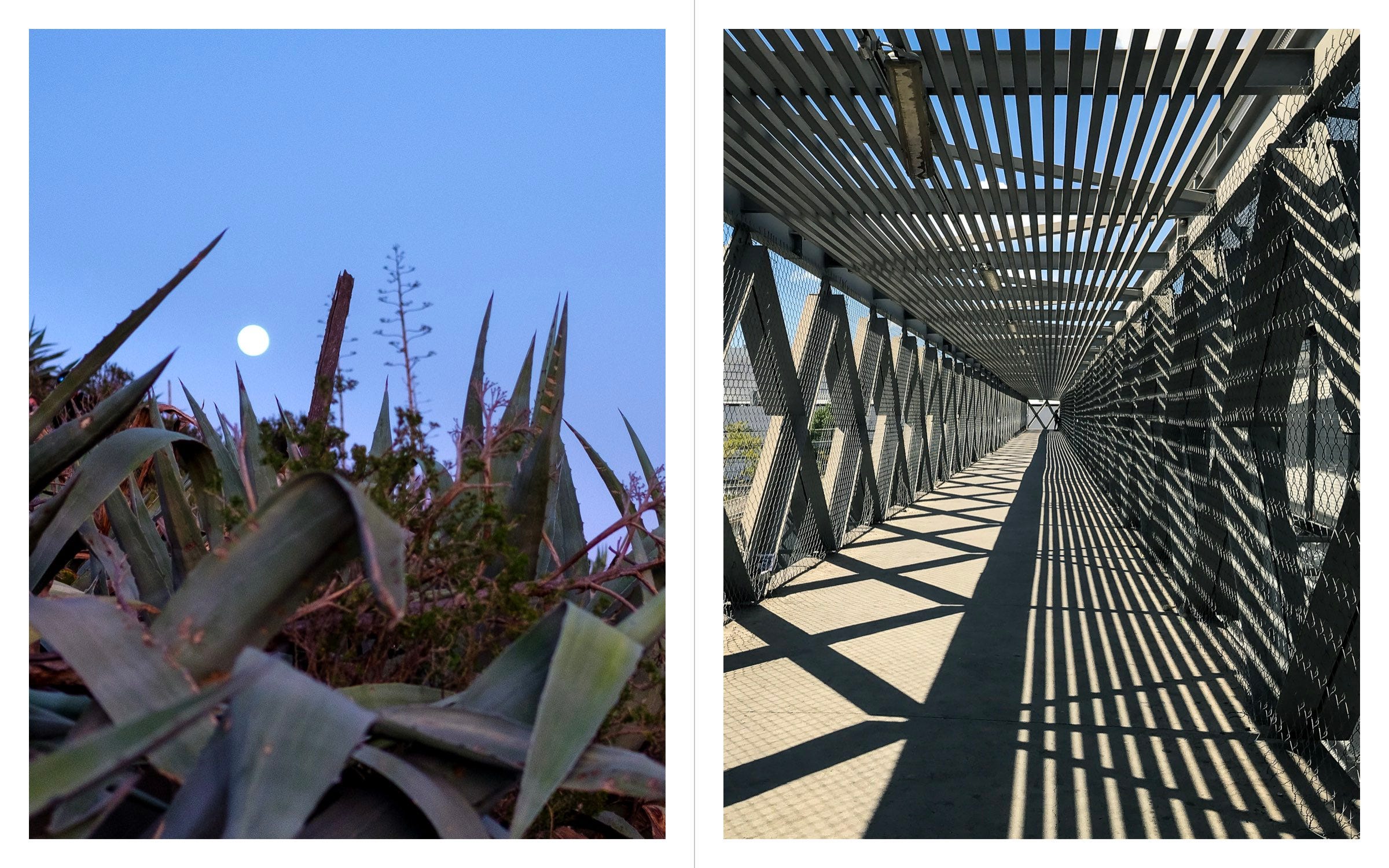
Reappropriating photographs from my archive felt quite liberating and resourceful. Cropping images to show only relevant information was one step, and utilising non- religious subject matter was another. In a coincidence that suited my narrative, a bloody flip-flop at an animal sacrifice in Nepal happened to contain the name of a Greek goddess. And by pairing photographs of tunnels and moons, I aimed to evoke visions of the Large Hadron Collider and the Higgs Boson. I’m not sure if this is too contrived, but that’s how my mind works.
So, what to make of it all? Otherness is a framework. One that visual artists and contemporary photographers use to construct projects. It’s handy when the topic involves identity, cultural dynamics, and power structures. Gallerists and other gatekeepers are on board. So, if only as a viewer, it’s worth understanding to appreciate artistic work at a deeper level. However, despite being well-intentioned, ethics derived from the concept of otherness run the risk of patronising people if overemphasised. I prefer to take people as I find them and let the chips fall where they may. That said, these ideas have got me looking at my back catalogue with new eyes and rethinking my practice.
Next up, Laia Abril7 and a subject called New Narratives: Contemporary Storytelling. For previous posts in this series, click here.
Website: gloriaoyarzabal.com (Gloria Oyarzabal)
Photographic series: April Fool (2020) by Erwin Olaf
Article: Good Intentions (1991) by Ingrid Sischy (The New Yorker)
Article: Aesthetics and Ideology of Sebastiao Salgado (2015) by Nerris Markogiannis (New York Photo Diary)
Book: Siddhartha (1922) by Hermann Hesse (Goodreads)
Music video: Higgs Boson Blues by Nick Cave & The Bad Seeds (YouTube)
Website: laiaabril.com (Laia Abril)
"I prefer to take people as I find them and let the chips fall where they may." I feel the same way. The rest of it feels like something that exists solely in Academia. But I can appreciate being challenged which is the point of University. And I'll leave it at that. A thoughtful post. I enjoy reading about your journey.